The Best Food Dehydrator
Which is the best food dehydrator? This article compares important features to look for in a dehydrator, and compares square Excalibur and Cosori dehydrators to round Nesco dehydrators.
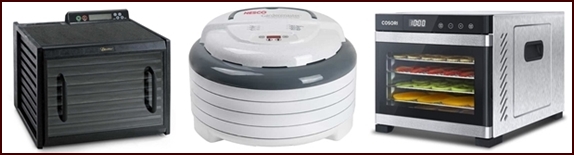

Photo above: Excalibur, Nesco, and Cosori dehydrators.
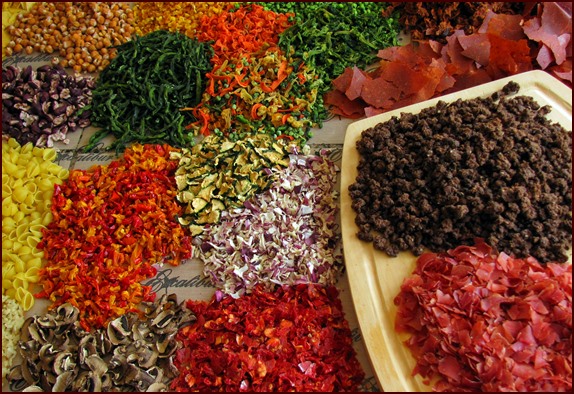
I dry a lot of food here at Backpacking Chef.
Two important features of a food dehydrator for me are:
- High capacity per tray
- Ease-of-use
Capacity and ease-of-use relate not only to the size and shape of the trays, but also to how the trays are designed with regard to tray frames, mesh inserts or sheets, and nonstick inserts or sheets.
Square Trays vs Round Trays
Excalibur trays are square. Cosori trays are retangular. Nesco trays are round with a hole in the middle. You lose drying capacity due to the donut shape.
Two-and-a-half pounds
of mashed potatoes only take up three Excalibur trays. With my 5-tray
Excalibur, I can dry two to three pounds of vegetables on the other two
trays at the same time.
Fruit takes up more space than vegetables, so my 9-tray Excalibur is ideal for dehydrating big quantities of fruit when it’s on sale. Juicy fruit takes longer to dry than meat and vegetables, so it’s more efficient to dry one big batch than to dry several smaller loads over several days with a low-capacity dehydrator.
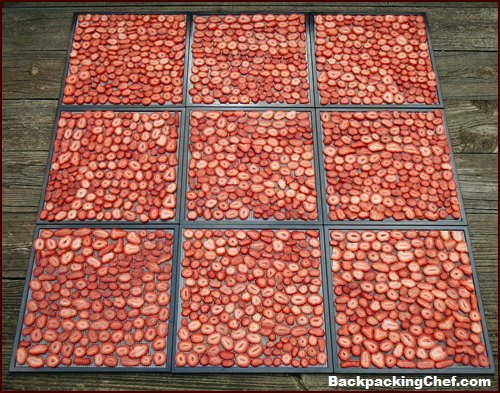
Excalibur trays with 9½ pounds of strawberries ready to dry.
Capacity per Tray Comparison
The drying area of an Excalibur tray and a Cosori tray was determined by multiplying width x length. Only the part of the tray that holds food, not the outer framework was included.
1. Excalibur Food Dehydrator
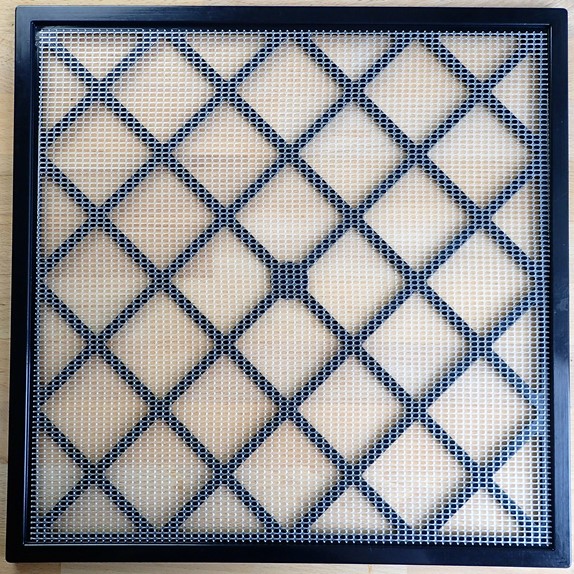
An Excalibur food dehydrator tray has rigid plastic framework with a flexible mesh sheet that sits on top.
Drying Area: 14" x 14" = 196 sq. in.
2. Cosori Food Dehydrator
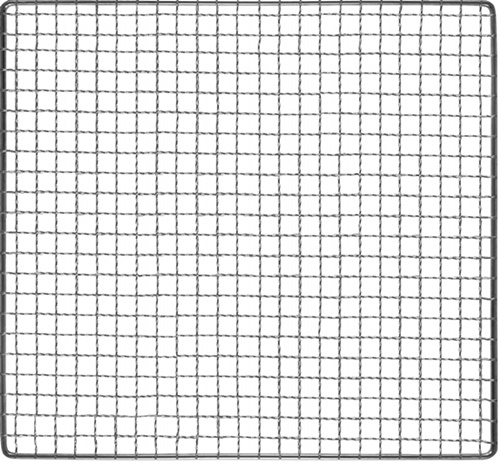
A Cosori food dehydrator tray has a stainless steel wire framework. Extra mesh sheets may be purchased separately for drying small food items that would fall through the spaces. Solid trays may be purchased separately for drying liquids like fruit leathers and soups.
Drying Area: 13" x 12" = 156 square inches.
3. Nesco Gardenmaster Dehydrator
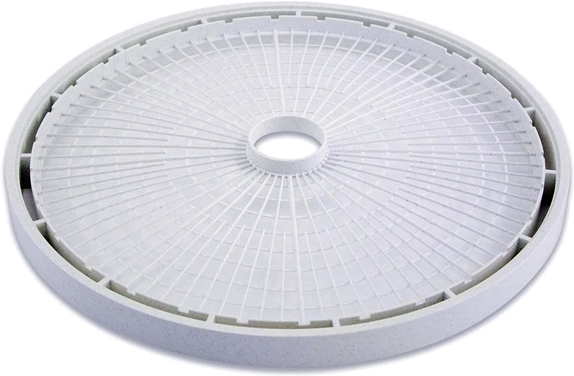
Nesco food dehydrator trays are round and have plastic spoked frameworks. Extra Clean-A-Screen inserts may be purchased separately to keep small food items from falling through the spaces. Extra solid fruit leather inserts may also be purchased separately.
The drying area of Nesco trays was determined by using the formula A=TTr², where TT=3.14 (pi) and r= radius (½ the diameter). The same formula was used to determine the area of the hole in the middle, which was subtracted from the first calculation to determine the usable drying area.
Nesco Gardenmaster:
Drying Area: 13.75 in. across (35 cm), less hole in the middle = 144 sq. in., 926 sq. cm.
4. Nesco Snackmaster Dehydrator
The Nesco Snackmaster has smaller trays than the Nesco Gardenmaster.
Nesco Snackmaster:
Drying Area: 12.5 in. across (13.75 cm) less hole in the middle = 118 sq. in., 761 sq. cm.
Drying Area Per Tray Summary
- Excalibur: 196 sq. in., 1264 sq. cm
- Cosori: 156 sq. in., 1003 sq. cm
- Nesco Gardenmaster: 144 sq. in., 926 sq. cm
- Nesco Snackmaster: 118 sq. in., 761 sq. cm
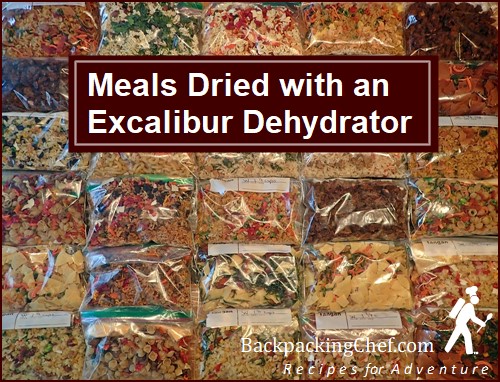
31 Dehydrated Meals dried in a few days using a 9-tray Excalibur
Food Dehydrator Mesh Sheets
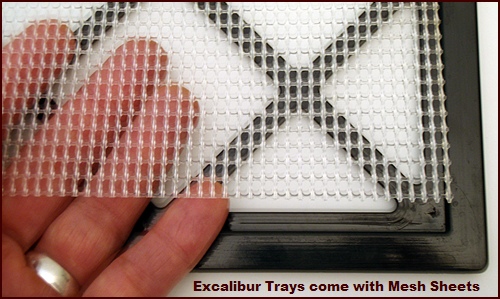
Excalibur dehydrators include mesh sheets for each tray which are necessary for drying small vegetables like peas and corn.
The mesh sheets are flexible, so it's easy to pop off fruits, like bananas and pineapples, which tend to stick to plastic when dried.
The flexible Excalibur mesh sheets make it simple to transfer dried foods directly into storage containers such as wide-mouth mason jars.
Cosori dehydrators have rigid, stainless steel wire trays. They are fine for drying most foods, but smaller foods will fall through the spaces between the wires. Mesh sheets can be purchased separately, since the units only come with one. ($14.99 set of two)
Nesco dehydrator trays have wide spaces between the spokes, so small food items will fall through without mesh sheets.
Nesco mesh sheets are called Clean-A-Screens, and must be purchased separately, although one screen may be included with the unit. ($8.49 set of two)
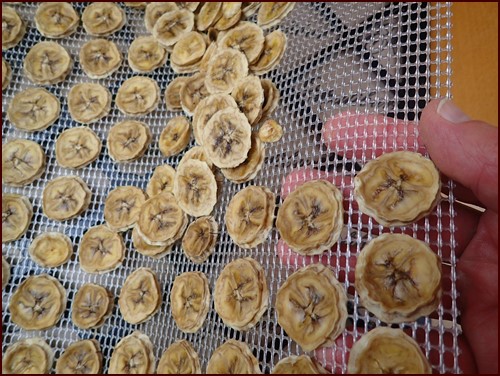
Photo: Excalibur food dehydrator mesh sheets are flexible.
Food Dehydrator Nonstick Sheets
All dehydrators require the purchase of nonstick sheets, also called fruit roll sheets. You will use them to dry foods like mashed potatoes, whole meals, soups, tomato sauce, and fruit leather. Some models come with a sample sheet.
Nonstick sheets are reusable and work better than parchment paper. Never use wax paper. It melts.
Excalibur nonstick sheets are called Paraflexx sheets. ($13.99 each). Less expensive brands of nonstick sheets that fit Excalibur dehydrators are available on Amazon for $1.69 each. (Affiliate link).
Cosori dehydrator fruit roll trays cost $15.99 each on Amazon. They don't work very well for making fruit leather, and you are better off using the inexpensive nonstick sheets mentioned above, or these silicone nonstick trays with raised edges from Amazon.
Nesco fruit roll sheets hold the least amount of blended food because of the donut shape. ($8.49 set of two)
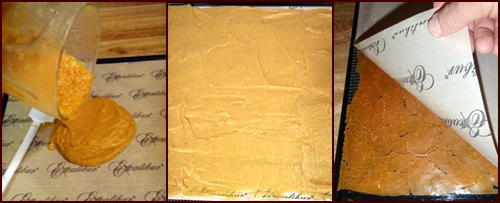
Photo: Dehydrating Sweet Potato Bark on Excalibur tray with nonstick sheet.
Spreading liquefied food is easy on square Excalibur dehydrator trays because there are no holes in the middle, and no outer lips to get in the way of my spatula.
Food Dehydrator Features
Fan
You will grow a beard waiting for bananas to dry if you buy a cheap food dehydrator without a fan. Some banana slices may dry like poker chips while others remain moist. Making bark or fruit leather is nearly impossible without a fan.
Excalibur, Cosori, and Nesco dehydrators all have fans. Ronco dehydrators do not.
Adjustable Temperature Settings
Different foods require different temperatures.
Meat is dried at the high end while herbs are dried at the low end. Vegetables and fruits are dried in the 125°F to 135°F range. (52°C to 57°C)
Excalibur, Cosori, and Nesco dehydrators such as the Nesco Gardenmaster Pro have temperature settings from 105°F to 165°F. (40°C to 74°C).
The lower-priced Nesco FD-37 food dehydrator does not have an adjustable thermostat. It dries all food at the high temperature of 160° (71°C).
One temperature fits all is not a good strategy for drying food.
Timer with Automatic Shut-off
This convenient feature lets you put a load of food in the dehydrator and then go to bed or work. The dehydrator shuts itself off when you tell it to.
Another use for a timer is to set the dehydrator to shut off before a food is all the way dry. I often do this when I want to flip bark or fruit leather over after it is about ¾ dry. Sometimes I also dry foods, such as broccoli and apples, at the same time. I set the timer to shut the dehydrator off when I expect the broccoli to be dry, and then turn it back on to finish the apples.
Excalibur, Cosori, and Nesco Gardenmaster Pro food dehydrators have timers with automatic shut off, although some less expensive models do not have that feature.
Top or Back Mounted Heating Element and Fan
Drippings and crumbs can cause dehydrators with bottom-mounted heating elements to malfunction or fail. Care must be used when operating and cleaning a dehydrator with a bottom-mounted heater and fan.
Heating element/fans are located at the back of Excalibur dehydrators and Corsi dehydrators.
Nesco dehydrators heaters/fans are on top, except for the FD-1010 Gardenmaster Pro which heats and blows from the bottom.
Expandability
Extra stacking trays can be purchased to increase the capacity of Nesco food dehydrators for $14.99 per set of two. Adding too many extra trays may affect the drying consistency of the unit. Temperatures may be higher at the top than at the bottom.
You would have to order eight extra trays at a cost of $60 from Nesco to bring the 4-tray Gardenmaster up to the capacity of the 9-tray Excalibur, plus you would need about $34 worth of additional mesh sheets.
Excalibur food dehydrators have fixed capacities of 5, 9 or 10 trays and Cosori dehydrators have a fixed capacity of 6 trays.
Stacking or Sliding Trays
Nesco dehydrators have stacking trays so when you want to peek in on a tray you have to lift off the trays above it. Excalibur and Cosori dehydrator trays slide in and out which makes it very easy to check on food and rotate trays. Rotating trays occasionally helps food dry uniformly and is also beneficial when making bark or fruit leather since air circulation through the food is reduced by the nonstick sheets.
How Much Does a Food Dehydrator Cost?
Nesco 4-tray Gardenmaster Digital Pro
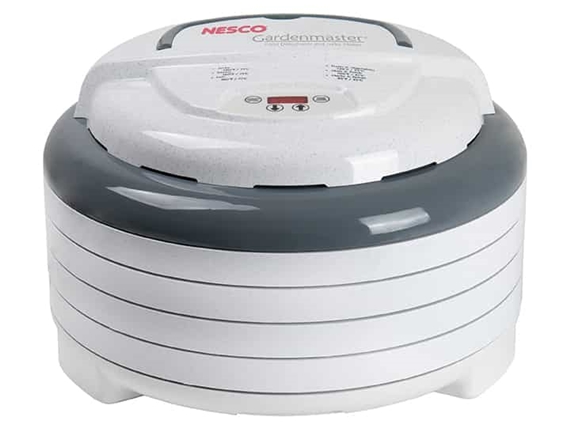
The 4-tray Nesco Gardenmaster Digital Pro Dehydrator, shown below, sells for around $102, before considering add-ons like clean-a-screens and fruit-roll inserts. Additional trays can be purchased to expand capacity. ($14.99 set of two)
Cosori 6-tray Stainless Steel
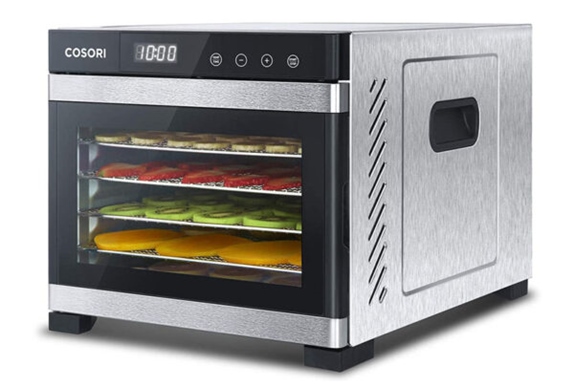
The 6-tray Cosori Dehydrator, shown below, is getting good reviews at a middle price point of $159. It includes one mesh and one nonstick sheet, so you will have to buy the extra sheets separately.
Check out my comprehensive Cosori Dehydrator Review.
I dried all kinds of foods with it over several months before writing the review.
Excalibur Dehydrators
The 9-tray Excalibur Dehydrator with 48-hour digital controls and clear door, shown below, is the top of the line and usually sells for around $419 direct from Excalibur.
The 5-tray Excalibur Dehydrator with the same features sells for $369 direct from Excalibur.
Excalibur often has 10% to 20% off sales, so it's worth checking into buying direct.
Excalibur dehydrators with manual time/temp dials and solid doors are less expensive.
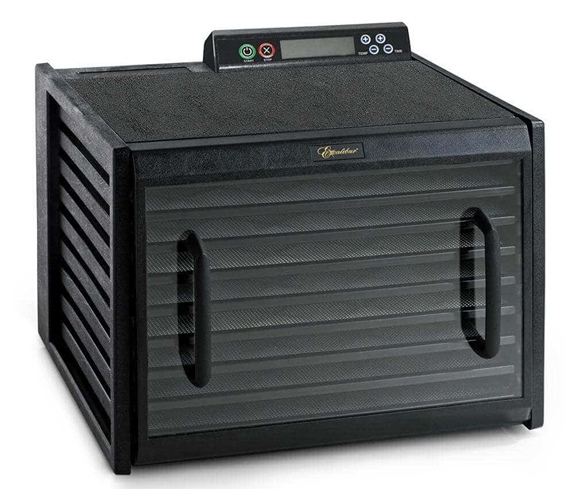
My Excalibur 9-tray and 5-tray food dehydrators with timers have worked exceptionally well for me over more than a decade of use. I have dried hundreds of backpacking meals and a steady supply of fruits, vegetables, meats, and starches with them. I use one in America and the other in Switzerland.
Which size Excalibur is the best value?
When shopping, if you divide the total cost of the dehydrator by the number of trays, the 9-tray Excalibur with clear door and digital controls costs substantially less per tray than the 5-tray Excalibur with the same features ($46 vs $73 per tray, based on current prices when buying direct).The 9-tray is the best value.
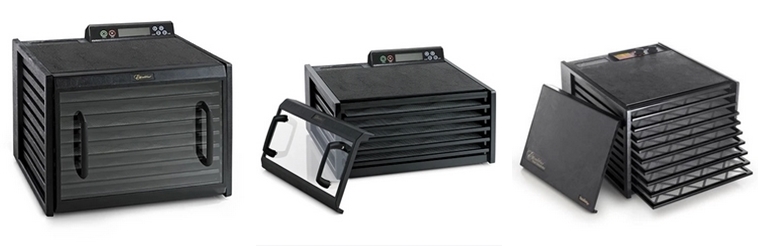
Photos: Excalibur food dehydrators are available with choice of digital or manual time and temperature controls, clear or solid doors, and 9 or 5 trays.
 |
America's Best Dehydrator Buy Direct from Excalibur  |
Disclosure: Disclosure: As an Excalibur Dehydrator Affiliate, Backpacking Chef may earn a commission from qualifying purchases. Thank you.
Shop Food Dehydrators on Amazon
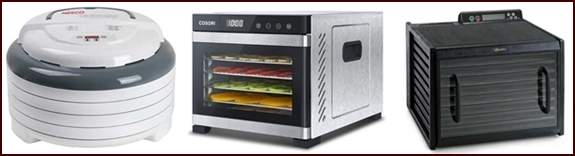
L-R: Nesco 4-Tray, Cosori 6-Tray, Excalibur 9-Tray.
NESCO Gardenmaster Digital Pro Dehydrator, 4 Trays
COSORI Dehydrator Digital Controls, 6 Stainless Steel Trays
Excalibur Dehydrator Digital Controls, 9 Trays
Disclosure: As an Amazon Affiliate, Backpacking Chef may earn a commission from qualifying purchases. Thank you.
Reader Reviews of Excalibur, Nesco, and Cosori Food Dehydrators
Excalibur & Nesco Dehydrators
Al: I was running really slowly due to lack of dehydrator capacity. I already had a Nesco which I had upgraded to 6 trays, so I decided to equip it to max capacity (12) and use it. I did this in stages, and as it turns out, I probably should have just bought an Excalibur Food Dehydrator. I don’t recall reading it in your review, but a cost comparison between equally equipped dehydrators might have saved me. As I see it, from a capacity standpoint the Nesco with 10 trays is roughly equivalent to an Excalibur with 5. If you are starting from scratch, the Excalibur would seem to be the better choice due to the fewer trays for air to pass through and the rectangular shape. I went to 12 trays and spent $130 over what I paid years ago for the Nesco. I would probably have been better off to get the Excalibur 5 tray unit.
Al: (Update) On a limited sample of 3 sessions, my Nesco, expanded to 12 trays (the recommended maximum expansion capacity) seems to be taking as much as twice as long to dry the foods as the estimates in the Action Guide. I think the Nesco is 500 watts and the Excalibur is 600, plus the Nesco has to force air through 12 trays instead of 9. I can feel a temperature difference on the sides of the trays. It gets cooler as I slide my hand down. The items in the top part are getting done quicker and perhaps overdone.
Genne: I had one that required tray rotation. Never again! I have been using an Excalibur for about 6 years...love it!
Leslie: Excalibur. So efficient. I do meals for groups, so I need the space. Have used for several of your recipes. Current fav is unstuffed peppers.
Chef Glenn: Are you cooking the whole meal and dehydrating it, or are you drying the ingredients separately and then assembling?
Leslie: Separate ingredients. I usually prefer cooking and then dehydrating, but it worked well this way. We took it to the Timberline Trail in Oregon and people liked it a lot. Luckily I had a couple servings left over for future trips. Yum.
Chef Glenn: Thanks. That's the way I prefer to do it. I find that the colors of the peppers hold up better if dried separately.
Joe: I don’t have an Excalibur but do have a square model with shelves. That’s all I’ve ever used and have never had any issues. I still have to swap trays every few hours and throw them in the dishwasher when I’m done.
Debbie: I have both a round and a rectangle food dehydrator. The round one is about 30 years old and still going strong. It does require tray rotation and the round trays with a hole in the middle can be a pain. I 'upgraded' to a rectangle one a few years ago and really like it. It is the one I use all the time. It dries things more evenly without having to rotate trays. It's a cheaper model than Excalibur and I'm more than happy with it.
Tanya: Excalibur. We have had it for 5 yrs. Even though it fell in an earthquake we had and got banged up, it still keeps going! We use it for jerky, fruit and backpacking food. It's a work horse in our home.
Kim: I have a 20+ year old American Harvest food dehydrator. I'd love an Excalibur, but this one works, and thus I cannot justify buying a new one. I'd love to not have to deal with that stupid hole in the middle of trays – it can make pouring the dried food off the trays messy.
Sylvie: I have the Excalibur. I love the shelves and how little space it takes. I do all the dehydrating with it: fruits, vegetables, jerky, chilies etc.
Glenda: First time dehydrating, I borrowed a Nesco - turned me away from dehydrating. Then I bought a Weston square one and was happy with it until it died one month after the warranty ended. Not repairable. Now have an Excalibur and love it and it has a LONG warranty and you can buy replacement parts.
Tj: Excalibur! Used a round one for years and it finally (thankfully) died... so we upgraded! We make everything from kale chips to dry fruit to jerky, snack sticks, dehydrated deer liver and heart strips for my dog. And lots of dehydrated herbs. And flowers. It's an awesome machine, and the company really stands behind their warranty!
Elizabeth: Bought the Excalibur when I first started reading your site. Back when you were drying your hiking boots in it. Thank goodness for Dominique putting an end to that! I love, love the Excalibur. Thanks for turning me on to a great machine!
Jessica: I have a Nesco. The hole in the middle and round trays make it harder to pour/spread and place foods, but it's affordable and gets the job done.
Erica: I had a round one. Found an Excalibur for an amazing deal on a buy and sell site. It works SO much faster, especially for harder to dry stuff like meat and sauces/leathers. I figure I saved the value of the machine in electricity.
Barbara: I have had my Excalibur for more than 40 years, and it still works fine. I like that it’s rectangular, so space-efficient.
John: Had a Nesco for years, it wasn’t the round tho, it was square, but still worked the same. It did fine and I was happy with it, added a couple extra sections etc. But, I did find I needed shift stack order when doing large amounts. I was looking at getting another one or adding a couple more trays when it died, so I upgraded to the Excalibur. I like it a lot better, space wise it’s about same, I get more actual stuff in the dehydrator with no hole in the middle of each tray, and I get more even drying I feel. I do rotate the trays if doing a full load of stuff with long drying times. Also, it works great for as proofer for baking and gets a good amount of use for that purpose.
Sarah: Excalibur! Timer and heat control is awesome, space saving square design ditto.
Dinah: Nesco. I love mine. It does a great job and I can add
as many trays as I want. Visit Nesco Food Dehydrators to see all models.
Emily: Excalibur. It’s efficient and I can remove racks for bigger thicker items - even use it to prove bread!
Terry: Love my Excalibur, much better than those round ones. And it is made in America!
Rob: Excalibur, love everything about it!
Michelle: Love my Excalibur. Use it for gf cereal bars, fruit snacks, dog treats frequently
Chef Glenn: Gluten free cereal bars sounds interesting. What goes into them?
Michelle: Quinoa flakes, gf oats, sunflower seeds, pepitas, cashews, flaxseed, cranberries, applesauce, cinnamon & ginger. Sometimes I use pear sauce instead and raisins instead of cranberries, but I eat these a lot, especially when I travel.
Cosori 6-tray Dehydrator
Chef Glenn: See my new comprehensive Cosori 6-tray dehydrator review.
Christy: The Cosori stainless steel inside sold me. It is very quiet plus their Customer Service is great and very fast to respond and follow-up. I always wash mine by hand as they do not fit well in my dishwasher.
Barbara: I love my Cosori dehydrator and use it often. I bought the silicone mesh sheets and Teflon sheets for other items and bought some Excalibur paraflexx sheets that I fold up with clips for real liquid items as they release the leathers real easy. Just bought a second one a couple of months ago and use that one also. Very quiet machines I have to get close to them to know they are on! I haven’t tried drying anything on the metal trays by themselves. I hand wash my stuff and don’t use the dishwasher.
Kathy: A lot of machines have timers, which I think is a mistake, but at least the Cosori lets you set it for 48 hours. I like the stainless steel. The Cosori dehydrator is a nice, neat-looking machine and a lot more affordable than the Excalibur. I haven’t heard of any reliability issues. The trays are smaller than the Excalibur. It comes with 6 trays. I didn’t do the math to see if the machine volume is as big as the 5 tray Excalibur. The smaller trays make cleaning them easier than the Excalibur.
Chef Glenn Answer: Excalibur Trays (15” x 15” x 5 = 1125 sq. inches), Cosori trays (13” x 12” x 6 = 936 sq. inches).
Todd: Absolutely love my Cosori dehydrator. Have never had any problems with it and it runs very quiet.
Scott: Our 6-tray Cosori is nice and quiet. Easy to clean. Only issue is things seem to take about twice as long to dry than all the recipes say. I have not verified the temp of mine with an RTD yet.
Cheryl: I love the Cosori dehydrator’s quietness, but also love the stainless steel wire trays. It came with one mesh sheet. For smaller items I use parchment paper and poke holes in it with a knife. It also comes with 1 fruit roll sheet. Only improvement would be if it had 8 trays instead of six. I'd definitely buy another one.
Cathy: I have a Cosori dehydrator and love it.
Kelli: I have one that is almost identical to the Cosori, but sold under the Magic Mill brand name. I love mine!
Jodi: I’ve had my Cosori dehydrator since 2020 and make monthly batches of jerky. Works great. Easy to clean.
Martina: I use my Cosori often and have no complaints. It is so quiet I sometimes feel the need to make sure it’s still on. Does an amazing job even when our humidity is in the 95+% range. Well worth the cost and doesn't take up any more space than my old Nesco.
Fred: I bought a Cosori after reading the reviews and for price. I had long considered the Excalibur because of its build and popularity. We love our Cosori. It has big capacity, works perfectly and easy to clean.
Donna: I love my 6-tray Cosori. I bought extra mesh and fruit roll sheets. They are necessary. The only downside for me is it's very small.
Visit the Cosori Dehydrator Page on Amazon.

Share this page with friends on social media.





Free E-book & Newsletter

Free with Trail Bytes subscription.

Dehydrating Food from A–Z