Dehydrating Chicken
Dehydrating chicken that rehydrates well is not as cut and dried as you might think. I tried baking, poaching, frying and grilling it with the same results – tough dried chicken!
There are solutions, though. You can dehydrate chicken from a can with good results. Pressure cooked chicken can also be dehydrated. Another option that works well is dehydrating ground chicken.
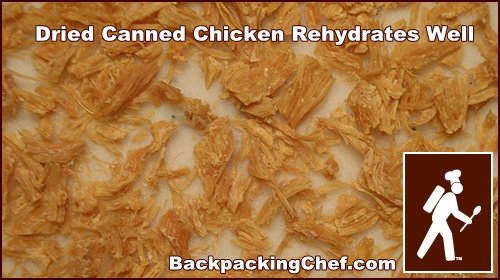
During my quest to find a way to dehydrate chicken that would return to tenderness on the trail, I put some canned chicken in the dehydrator and that was the answer. Canned chicken rehydrates fairly well in meals.
The difference has to do with the way that canned chicken is pressure cooked right in the can in a process called retort cooking. I have dried several brands including Swanson, Target, Hormel, and Tyson. They all turn out fairly tender when rehydrated.
I also dehydrated a couple of brands of pouched chicken which is also pressure cooked. The pouched chicken turned out more tender than my home cooked chicken, but was a little chewier than the canned chicken.
How to Dehydrate Chicken TOC
Dehydrating Chicken from a Can
Dehydrating Pressure-Cooked Chicken
Dehydrating Chicken from a Can
- Drain liquid from can. If there is any fat adhering to the chicken, rinse away under hot water.
- Pull chunks apart into smaller pieces and spread out on dehydrator tray.
- Dry at 145°F (63°C) for approximately 6–8 hours.
Yield: When dry, a 12.5 ounce can yields a little less than a cup and will weigh 1.5 to 2 ounces.
Store dehydrated chicken in an air-tight container, or in the freezer until you are ready to use it or pack for a trip.
Pressure Cooking Chicken before Drying
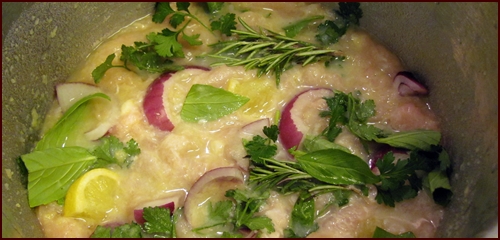
If you own a pressure cooker or are interested in learning how to pressure cook your own chicken for drying, I have developed a technique and recipe that tastes fantastic and is comparable to canned chicken for tenderness.
Pressure cooking your own chicken allows you to tenderize and infuse the meat with aromatic ingredients and herbs.
Explore the full recipe and instructions:
Pressure Cooking & Dehydrating Chicken
Dehydrating Ground Chicken
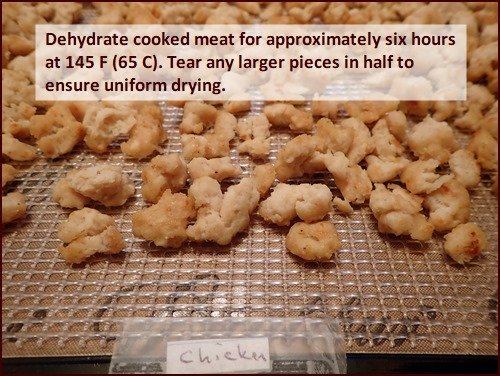
Dehydrating ground chicken and turkey is similar to drying ground beef.
Work in ½-cup of one of the starches below per pound of ground chicken or turkey before you cook it:
- Fine Breadcrumbs
- Ground Oats
- Ground Dehydrated Chickpeas
With the added starch, you will be amazed at how well the ground chicken rehydrates in meals.
For more starch tips, see: Dehydrating Breadcrumbs and Dehydrating Chickpeas.
After browning the ground chicken in a pan, give it an extra ten minutes in the oven to ensure that it is cooked through.

Read the complete instructions in this back issue of Trail Bytes:
Dehydrating Ground Chicken & Turkey.
New Recipe: Dehydrated Turkey Loaf

This stuffed turkey loaf recipe is for anyone who ever dreamed about enjoying a Thanksgiving-style backpacking meal on the trail.
Explore the recipe and complete instructions:
Making & Dehydrating Turkey Loaf.
Dehydrated Chicken Recipes
Recipes for Adventure II: The Best of Trail Bytes
Chapter 5 of Chef Glenn's newest book has instructions for dehydrating chicken (both ground and pressure cooked), meatloaf, meatballs, shrimp, and Canadian bacon bits, plus recipes for delicious meals.



Dried Chicken & Rice Recipes
1. Substitute chicken for ground beef or ham in any of the Backpacking Chef recipes to add variety to your backpacking menu.
2. Chicken goes well with rice and vegetables in backpacking meals.
- To add extra flavor, precook the rice in fat-free chicken broth before drying it.
- For an Asian flair, add a few teaspoons of soy sauce to the cooked rice before you dry it.
- See also: Dehydrating Rice & Risotto.
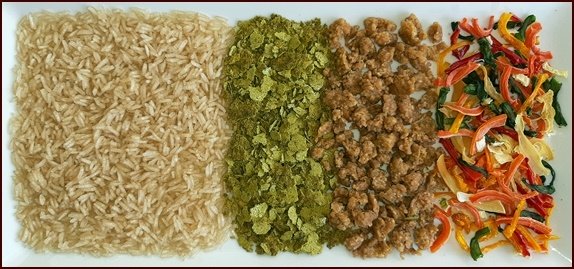
Try the dehydrated chicken recipe shown above:
Thai Green Curry with Chicken & Rice.
In my book, Recipes for Adventure, you’ll find more chicken recipes like Chicken & Rice Cacciatore and Curry Chicken & Rice shown below.
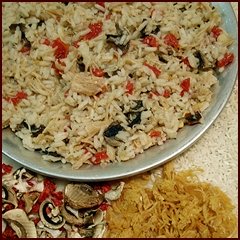 |
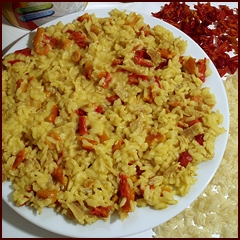 |
Tips for Dehydrating Chicken Shared by Readers
Here are two other methods of dehydrating chicken shared by Backpacking Chef readers:
Dehydrating Steamed Chicken
Shared by Jeff the Chef.
- Buy a large chicken, not extra large, so as not to get a fatty bird.
- Skin and trim all the fat.
- Cut it in half and steam for one hour until falling apart.
- Remove bones and pull meat apart into small pieces.
- Hit with seasoning salt or a little soy sauce if for Asian dish.
- Dehydrate at 145° - 155° until dry (time varies with dehydrator model)
Yield: 15-20 ¼ cup portions for the price of two cans!
Jeff says, "Steamed chicken has excellent flavor and less fat than canned chicken. The fat drips off the bird during steaming and can be helped along by pouring hot water over the bird. I do this with turkey and duck also."
Dehydrating Broasted Chicken
Shared by PasnThru.
Broasting is pressure cooking with oil. Restaurants such as Kentucky Fried Chicken (KFC) cook their chicken this way. Because the meat is cooked under pressure, much less oil enters the meat compared to open frying.
Thigh meat has nearly twice as much fat as breast meat, so it is less desirable for long-term storage. For best results, choose breast meat.
Do not cook with oil in a home pressure cooker!

Share this page with friends on social media.


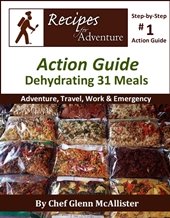



Free E-book & Newsletter

Free with Trail Bytes subscription.
Dehydrating Food from A–Z